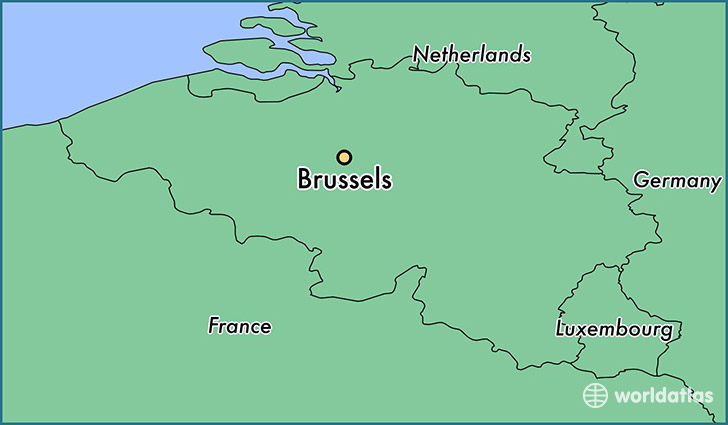
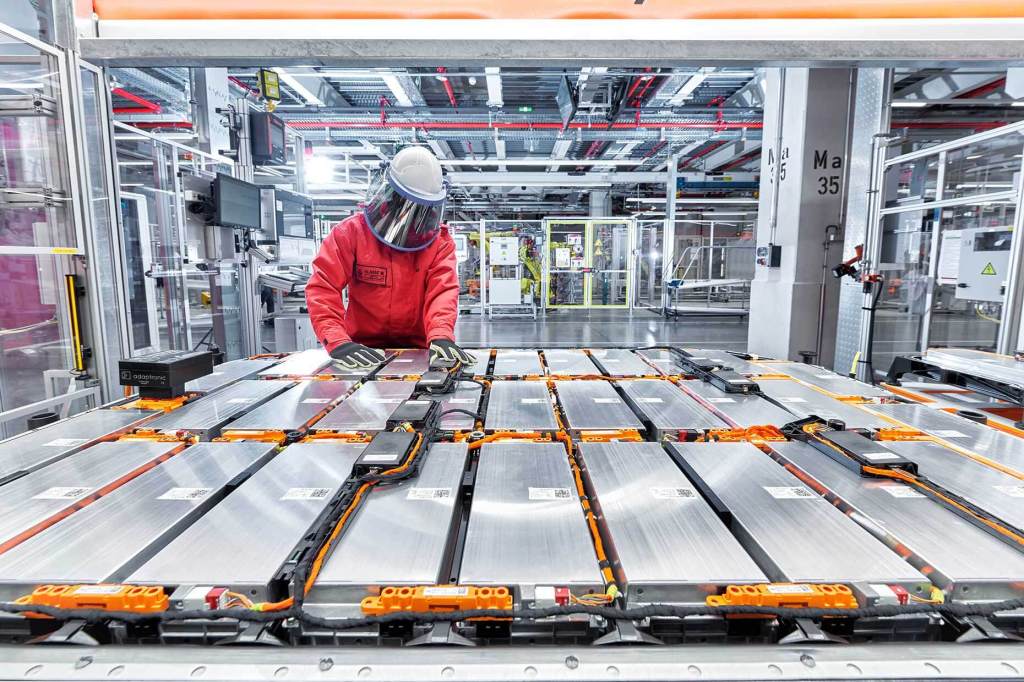
In the southern of Brussels the future of Germany’s most successful automaker is taking shape inside a interesting sort of car factory. Here, there are no pipes, transmissions or fuel tanks. There are no spark plugs, radiators or manifolds. What the Volkswagen Group factory does have, however, are batteries stacked to the rafters.
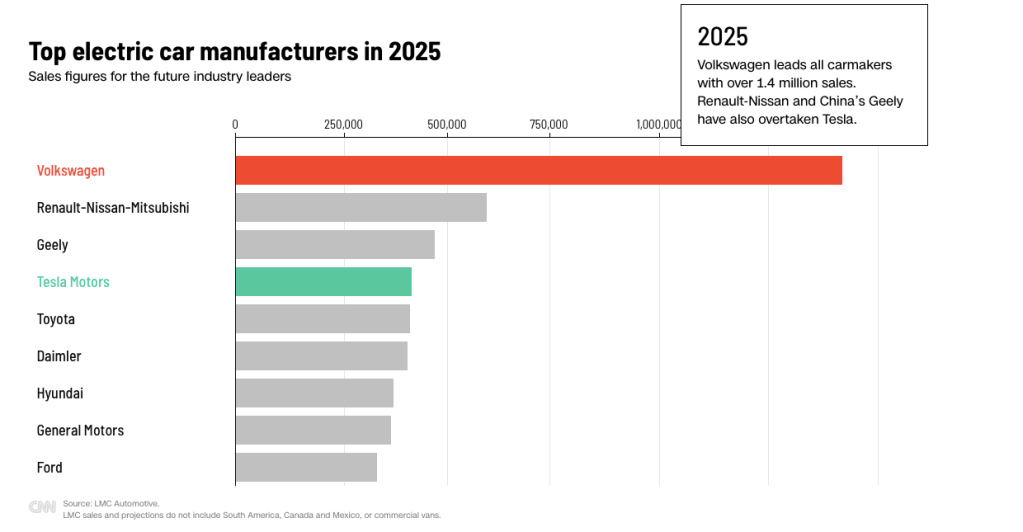
Volkswagen isn’t alone. Established carmakers around the world are ripping up their business models in the hope of adapting to a new world in which electricity replaces gasoline and diesel. The German group, which also owns Porsche, Bugatti, Skoda, Lamborghini is rising to the challenge with a radical transformation that is unparalleled since World War II. The company is spending €30 billion ($34 billion) over the next five years to make an electric or hybrid version of every vehicle in its lineup, and it plans to launch 70 new electric models by 2028. By the end of 2030, it wants four of every 10 cars it sells to be electric.
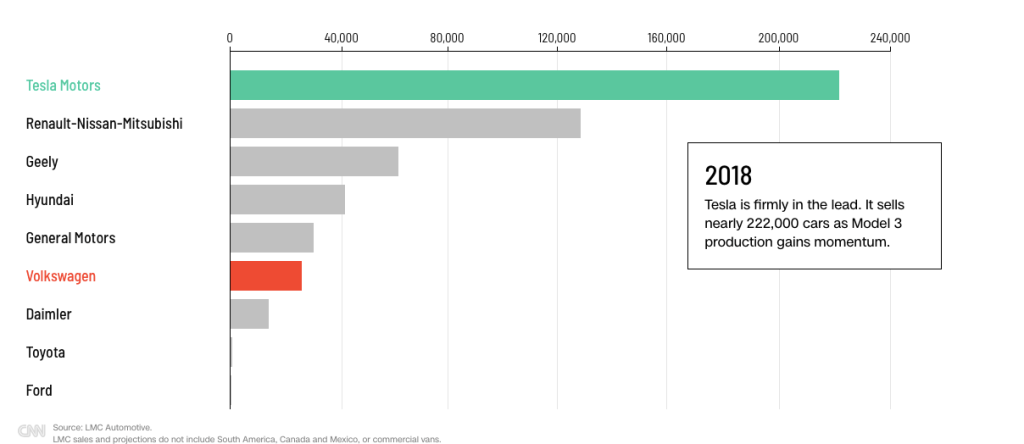
Until recently, Volkswagen never had much reason to bother with electric cars. Instead, it poured investment dollars into making its diesel engines more fuel efficientand affordable, which helped it to sell huge volumes of cars and overtake Japanese rival Toyota. In 2018, Volkswagen delivered a record 10.8 million cars. It says just 40,000 of those, or 0.4%, were electric vehicles. Another 60,000 were plug-in hybrids.
Disinterest on the part of traditional carmakers cleared the way for the opening laps of the race to be won by Tesla, the company run by indefatigable entrepreneur Elon Musk. Tesla sold over 220,000 electric cars in 2018, according to LMC Automotive, roughly 70,000 more than its nearest competitor, Chinese state-owned BAIC Group. The global alliance of Renault, Nissan and Mitsubishi Motors sold roughly 130,000 electrics last year, while Volkswagen’s German rivals BMW and Daimler sold 33,000 and 14,400, respectively